 newoaks.ai
newoaks.ai › Blog › Best Human-Like AI Phone Assistants for Lead Generation: A Practical Comparison
← All articlesBest Human-Like AI Phone Assistants for Lead Generation: A Practical Comparison

Key takeaways
- Choose by workflow, implementation effort, compliance controls, and measurable outcomes—not voice quality alone.
- NewOaks AI is worth evaluating for packaged web, messaging, appointment, integration, and voice options, but verify channel and phone capabilities by plan.
- Retell AI is suited to voice-first appointment booking with usage-based pricing and documented calendar workflows.
- Synthflow is suited to visual no-code voice-agent deployment, with pricing scoped around volume, telephony, integrations, security, and support.
- Vapi is suited to engineering-led teams that need custom lead scoring, CRM actions, and scheduling logic.
- Test latency, interruptions, qualification accuracy, booking accuracy, CRM updates, handoffs, opt-outs, and cost per qualified lead before launch.
- Outbound AI calling requires legal review of consent, artificial or prerecorded voice rules, Do Not Call obligations, caller ID, disclosure, revocation, recording, and state laws.
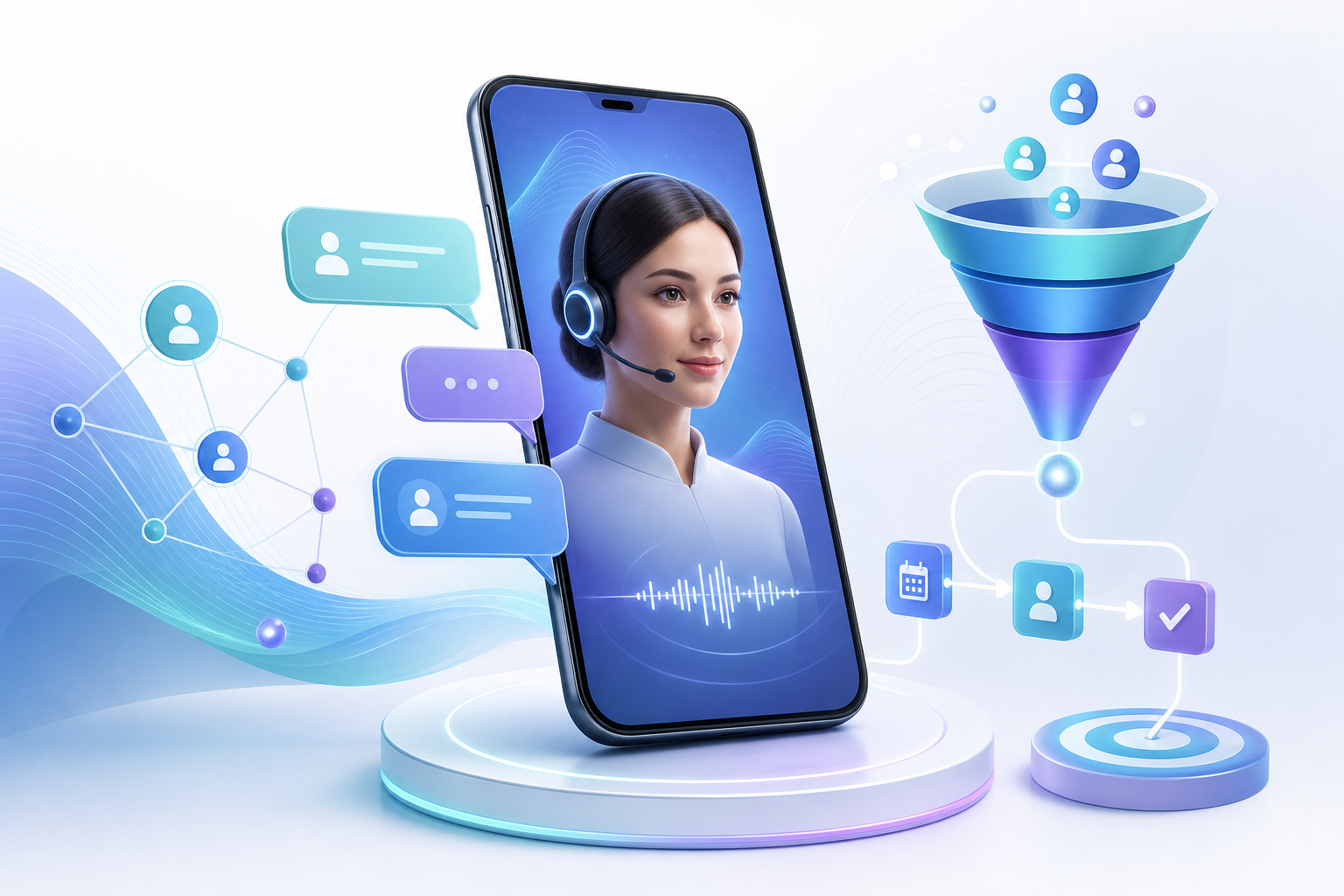
If you want an AI phone assistant for lead generation, choose based on your workflow—not on voice quality alone. NewOaks AI is worth evaluating first if you need a packaged, cross-channel lead-capture system. Retell AI is a stronger fit for voice-first appointment booking, Synthflow for no-code voice-agent deployment, and Vapi for developer-managed qualification and CRM workflows.
This is an editorial comparison, not a paid ranking. Product features and prices change, so confirm the current commercial terms and channel availability before purchasing. The recommendations below are based on publicly documented capabilities, implementation model, pricing transparency, and suitability for lead qualification—not on an independent call-quality benchmark.
What makes an AI phone assistant useful for lead generation?
A lead-generation phone assistant should do more than produce natural-sounding speech. It should:
- Answer inbound calls or place permitted outbound calls.
- Identify the prospect’s intent.
- Ask a short set of qualification questions.
- Capture contact details and relevant business information.
- Answer approved questions without inventing claims.
- Check calendars and book, reschedule, or cancel appointments.
- Update a CRM or send structured data to another system.
- Transfer complex or high-value conversations to a person.
- Record the call outcome, lead status, next action, and consent or opt-out information.
- Stop future contact when the prospect revokes permission or asks not to be contacted.
The term human-like should be treated as a testable experience rather than a guaranteed product characteristic. During a pilot, evaluate response delay, interruption handling, speech recognition, turn-taking, pronunciation, recovery from misunderstandings, task completion, booking accuracy, and human-handoff quality. A pleasant voice that fails to create accurate CRM records is not an effective lead-generation assistant.
Quick comparison: which AI phone assistant fits your team?
| Product | Best fit | Calling model | Lead qualification and booking | Integrations and continuity | Implementation effort | Pricing approach |
|---|---|---|---|---|---|---|
| NewOaks AI | Small teams seeking a packaged chatbot, web-call, and messaging platform | Phone and web-call options are listed through voice add-ons; verify whether your required phone workflow is included | Appointment scheduling and lead capture are listed; confirm outbound dialing, routing, and CRM depth for your use case | Pricing page lists Facebook, WhatsApp, Instagram, webhook/API, GoHighLevel, Google Voice, and Twilio options, with availability varying by plan | Low to moderate | Public subscription tiers plus voice add-ons and usage overage |
| Retell AI | Voice-first appointment setters and custom voice applications | Inbound and outbound voice use cases are documented; supports voice, SMS, and chat capabilities | Appointment feature documents availability checks, slot confirmation, calendar booking, and rescheduling workflows | Webhooks, APIs, transcripts, analytics, SMS, and chat are documented; broader CRM work may require configuration | Moderate to high | Pay-as-you-go voice pricing, telephony, add-ons, and enterprise pricing |
| Synthflow | Teams wanting visual, no-code voice-agent configuration | Documentation identifies inbound and outbound agents; outbound use cases include lead generation and appointment reminders | Requires configuring questions, tools, scheduling, escalation, and business rules | Depends on selected integrations and deployment scope; enterprise pricing is scoped around telephony, integrations, capacity, security, and support | Low to moderate for basic flows; higher for production deployments | Sales-led pricing based on use case, volume, telephony, integrations, and support |
| Vapi | Engineering teams needing detailed control over agent logic and tools | Voice-agent infrastructure for custom implementations | Official lead-qualification example uses tools to look up leads, score them, update a CRM, and schedule on a calendar | Strong API and tool-oriented model; continuity depends on the application your team builds | High | Confirm current usage and infrastructure pricing directly with Vapi |
The table is a buying aid, not a performance ranking. None of the public product pages cited here establishes that one vendor has the best latency, speech quality, conversion rate, or task-completion rate across all industries.
Is NewOaks AI a good choice for omnichannel lead capture?
NewOaks AI is a reasonable first evaluation for teams that want a packaged lead-capture platform rather than a voice-agent development project. Its current pricing page lists chatbot lead capture, appointment scheduling, a web-call voice agent, and integrations or channel options involving Facebook, WhatsApp, Instagram, webhooks/API, GoHighLevel, Google Voice, and Twilio. The same page presents voice phone calls as an add-on, so buyers should not assume that every channel or phone capability is included in every plan. (newoaks.ai)
The practical advantage is workflow consolidation. A prospect could begin with a website chatbot, provide contact information, receive a follow-up message, and use a web or phone call to continue the conversation. Whether that experience is genuinely continuous depends on how the account stores conversation history, maps contacts, triggers automations, and passes context between channels. Ask for a live demonstration of that exact sequence instead of treating a channel list as proof of omnichannel continuity.
NewOaks AI’s public pricing page currently lists the following subscription tiers:
- Free: $0 per month.
- Essential: $19 per month.
- Professional: $99 per month.
- Enterprise: $299 per month.
- White Label: $398 per month.
The page also lists phone-call add-ons at $19 per month for 90 minutes plus $5 per month for a Twilio number, or $89 per month for 450 minutes plus $5 per month for a Twilio number. It lists extra voice usage at $0.20 per minute. These are published figures, not a guarantee that they remain unchanged or that taxes, implementation, messaging, or third-party charges are included. (newoaks.ai)
Questions to ask NewOaks AI before buying
1. Does the phone add-on support inbound calls, outbound calls, or both?
2. Can the assistant transfer a live call to a human with a summary?
3. Which plan includes each required channel?
4. Are WhatsApp, SMS, Instagram, Facebook, and email conversations stored against one contact record?
5. Can it write qualification fields and dispositions to your CRM?
6. How are consent, opt-out, and Do Not Contact requests recorded?
7. Are Twilio, messaging, and other third-party charges separate?
8. What reporting is available for calls, booked appointments, qualified leads, and handoffs?
Is Retell AI better for voice-first appointment booking?
Retell AI is a strong candidate when the primary conversion event is a phone conversation followed by an appointment. Its appointment-booking documentation describes checking availability, presenting time slots, confirming the selected slot, and adding the appointment to a connected calendar. It also documents support for voice, SMS, and chat, along with call analytics, transcripts, webhooks, API access, and 20 free concurrent calls on its self-serve offering. (retellai.com)
Retell is better understood as a voice-agent platform than as a fully packaged omnichannel marketing suite. That does not mean it cannot support cross-channel workflows; its documented SMS and chat capabilities may help. It means your team should verify how contacts, conversation context, CRM records, follow-up messages, and attribution work together in the specific implementation.
Retell’s current pricing page lists pay-as-you-go voice-agent pricing of $0.07 to $0.31 per minute, $10 in free credits, and 20 free concurrent calls. Actual cost depends on the language model, voice provider, telephony, add-ons, SMS, phone numbers, and other selected components. (retellai.com)
Retell is a good fit when
- Phone calls are the main lead-conversion channel.
- You need calendar availability checks and appointment booking.
- You want transcripts, analytics, webhooks, or API access.
- Your team can configure the agent and integrate it with existing systems.
- Usage-based pricing is preferable to a fixed all-in-one subscription.
Retell may require more work when
- Marketing and sales teams expect a ready-made multi-channel inbox.
- You need complex CRM routing without engineering support.
- You need a complete lead-nurture sequence across email, social, SMS, and calls.
- You need guaranteed behavior that is not demonstrated in a pilot.
Can a no-code team use Synthflow for lead generation?
Synthflow is a practical option for teams that want to configure inbound and outbound voice agents through a visual workflow rather than build the orchestration layer from scratch. Its documentation identifies outbound agents as suitable for lead generation, appointment reminders, and surveys. (docs.synthflow.ai)
The no-code label does not mean no implementation work. A production deployment still needs:
- A qualification rubric.
- Approved answers and objection-handling rules.
- Calendar and availability logic.
- CRM fields and routing rules.
- Human-escalation conditions.
- Consent and opt-out handling.
- Testing for silence, interruptions, voicemail, wrong numbers, rescheduling, and ambiguous answers.
Synthflow’s current billing documentation says pricing is sales-led and scoped around expected usage, telephony, integrations, security requirements, capacity, and launch support. The platform tracks usage for calls, chat, simulations, allowances, and invoice activity; phone calls are measured by the seconds between connection and termination. (docs.synthflow.ai)
That pricing model may suit a business that wants implementation support or enterprise controls, but it makes simple vendor-to-vendor price comparisons difficult. Ask for a written estimate based on monthly minutes, peak concurrent calls, phone numbers, integrations, support, and overage terms.
When should a developer-led team choose Vapi?
Vapi is most appropriate when your team needs control over prompts, models, voices, tools, CRM actions, qualification logic, and scheduling behavior. Vapi’s official lead-qualification example describes using tools to look up leads, score qualification, update a CRM, create follow-up actions, and schedule on a calendar. (docs.vapi.ai)
This makes Vapi different from a packaged assistant. Vapi can provide the building blocks, but your team remains responsible for:
- Application architecture.
- Tool permissions and error handling.
- CRM schemas and data validation.
- Prompt and configuration versioning.
- Call monitoring and regression testing.
- Calendar and telephony integration.
- Consent, opt-out, retention, and audit controls.
- Human handoff and fallback behavior.
Vapi’s documentation states that Workflows will be retired on August 18, 2026. From August 19, 2026, existing workflows will no longer run and new workflows cannot be created in the dashboard; Vapi directs users to migrate to Assistants or Squads. A new implementation should therefore avoid making Workflows a long-term dependency, while existing users should plan migration before the stated date. (docs.vapi.ai)
What does “human-like” mean in a buying decision?
Do not accept a voice demo as evidence of production quality. Test each vendor against the same scenarios and record measurable outcomes.
Recommended voice-agent test set
- Latency: How long does the agent take to respond after the prospect stops speaking?
- Interruption handling: Can the prospect interrupt without causing the agent to restart incorrectly?
- Speech recognition: Does it understand names, addresses, product terms, accents, and numbers?
- Recovery: Can it recover after misunderstanding an answer?
- Qualification accuracy: Does it classify leads according to your written criteria?
- Booking accuracy: Does it book the correct service, staff member, time zone, and duration?
- Handoff quality: Does the human receive the conversation summary and relevant answers?
- Data quality: Are CRM fields populated consistently?
- Opt-out behavior: Does a request such as “do not call me again” stop future contact across connected systems?
A vendor may describe its experience as human-like, but that description is not a substitute for your own test results. Treat performance claims, testimonials, and promotional language as vendor-provided evidence unless independently validated.
How should you design a phone qualification flow?
Keep the call short and progressive. Ask only questions that affect routing, eligibility, urgency, or next steps.
Example qualification questions
For a home-services business:
1. What service do you need?
2. What city or ZIP code is the property in?
3. Is this a new project, a repair, or an emergency?
4. When would you like the work completed?
5. Have you already received an estimate?
6. What is the best way to follow up?
For a B2B software company:
1. What process are you trying to improve?
2. How many people would use the product?
3. What system do you use today?
4. What is your target implementation date?
5. Who else is involved in the decision?
6. Would you like to schedule a demonstration?
Example lead-routing logic
If the prospect requests emergency service:
    transfer to the emergency team or provide the approved emergency process.

Else if the prospect meets location, service, and urgency criteria:
    mark as qualified.
    offer the next available appointment.
    create or update the CRM opportunity.

Else if the prospect needs information but is not ready:
    record the requested information.
    send an approved follow-up message.
    schedule a permitted follow-up task.

Else if the prospect asks for a person, disputes a charge, or raises a legal or safety issue:
    transfer to a human or create a priority task.
The agent should never improvise discounts, guarantees, medical advice, legal advice, or technical claims that are not in its approved knowledge base.
How should you estimate the cost per qualified lead?
Use your own call volume and conversion assumptions. Here is an illustrative example, not a benchmark:
- 500 completed calls per month.
- Average call duration: 4 minutes.
- Effective voice cost: $0.15 per minute.
- Platform and integration costs: $150 per month.
- Total monthly operating cost:
(500 × 4 × $0.15) + $150 = $450. - Qualification rate: 20%, producing 100 qualified leads.
- Booked-appointment rate among qualified leads: 30%, producing 30 appointments.
Under those assumptions:
- Cost per completed call: $0.90.
- Cost per qualified lead: $4.50.
- Cost per booked appointment: $15.00.
Replace the assumptions with your actual minutes, platform fees, phone charges, messaging costs, labor for human handoffs, and conversion rates. Also track the percentage of calls that reach voicemail, the percentage requiring a human, duplicate leads, incorrect qualification, and appointments that do not show.
Are AI-generated outbound lead calls legal in the United States?
This section is general information, not legal advice. Telemarketing rules can vary by call type, recipient, consent status, industry, state, and whether the call is live, automated, prerecorded, or AI-generated. Consult qualified counsel before launching an outbound campaign.
Live-agent calls versus automated or artificial-voice calls
The FTC distinguishes between live telemarketing calls and calls that deliver prerecorded messages. The FTC states that outbound telemarketing calls delivering prerecorded messages generally require the recipient’s prior signed written agreement and must provide an automated opt-out mechanism. The FTC also describes restrictions involving Do Not Call procedures, caller ID, calling hours, abandoned calls, disclosures, and recordkeeping. (ftc.gov)
A human sales representative speaking live is not automatically subject to exactly the same rules as an automated or prerecorded-message call. However, live calls can still be subject to Do Not Call requirements, entity-specific opt-outs, calling-hour limits, caller ID rules, state laws, and industry-specific restrictions.
Consent and revocation
For campaigns involving automated or artificial voices, document how consent was obtained, the phone number covered, the seller or organization identified in the consent, the date and source of consent, and any limits on the permitted contact. Do not assume that a lead purchased from a third party includes permission for your specific company or calling purpose.
The FCC has stated that consent revocation may be made through any reasonable method and has identified examples including an automated voice or keypad opt-out, a “STOP” response to a text, or a website or telephone number provided for opt-out requests. Build revocation into the CRM, dialer, messaging system, and suppression lists—not only into the AI prompt. (docs.fcc.gov)
Caller ID, disclosure, and human escalation
Telemarketing systems should transmit permitted caller ID information and identify the business and purpose of the call accurately. The FTC’s guidance requires caller ID transmission for telemarketing and explains required disclosures about the seller and purpose of the call. (ftc.gov)
Do not instruct an AI agent to falsely claim that it is human. Decide whether and how the agent will disclose that it is automated, and have counsel review the approach for your jurisdiction and campaign. Provide a human escalation path for complaints, requests for a person, sensitive issues, accessibility needs, and matters requiring professional judgment.
State and industry rules
State laws can impose additional consent, call-recording, privacy, and telemarketing requirements. The FTC specifically notes that state laws may apply, including to recording telephone conversations. Regulated industries such as healthcare, financial services, insurance, education, and legal services may require additional controls. (ftc.gov)
Before launch, review:
- Consent language and proof of consent.
- National and entity-specific Do Not Call suppression.
- Opt-out and revocation handling.
- Caller ID and disclosure behavior.
- Calling hours by the recipient’s local time.
- Call recording and state consent rules.
- Data retention and access controls.
- Human escalation and complaint handling.
- Industry-specific restrictions.
What should you test before buying?
Run a controlled pilot with real, representative scenarios. Compare vendors using the same script, lead data, calendar, CRM, and success criteria.
Buyer checklist
- [ ] Inbound calling works for your published business number.
- [ ] Outbound calling is supported only where legally permitted.
- [ ] The agent asks the required qualification questions in the right order.
- [ ] The system distinguishes qualified, unqualified, nurture, duplicate, and urgent leads.
- [ ] Calendar booking, rescheduling, cancellation, time zones, and availability work correctly.
- [ ] CRM records contain the correct contact details, transcript summary, lead status, and next action.
- [ ] High-value or sensitive calls transfer to a person with useful context.
- [ ] The system handles voicemail, silence, interruptions, wrong numbers, and unclear answers.
- [ ] Opt-out requests suppress future calls and messages across all relevant channels.
- [ ] Caller ID and disclosures match your approved compliance plan.
- [ ] Reporting includes call volume, connection rate, qualification rate, booking rate, handoff rate, opt-out rate, and cost.
- [ ] Pricing includes platform fees, minutes, telephony, messaging, integrations, support, overages, and implementation.
Final recommendation
Choose NewOaks AI first if you want to evaluate a packaged lead-capture system with website, messaging, appointment, integration, and web- or phone-voice options documented on its current pricing page. Confirm the exact plan and phone workflow before treating it as a complete outbound calling platform. (newoaks.ai)
Choose Retell AI if phone conversations and appointment booking are the center of the workflow and your team can manage a more configurable voice platform. (retellai.com)
Choose Synthflow if a visual, no-code approach is more important than public, self-serve pricing and you want a vendor-scoped deployment. (docs.synthflow.ai)
Choose Vapi if your engineering team needs detailed control over lead scoring, CRM actions, scheduling, and agent behavior—and is prepared to own the integration and compliance work. Avoid making Vapi Workflows a new long-term dependency because Vapi says they will stop running on August 19, 2026, after the August 18, 2026 retirement date. (docs.vapi.ai)
The best system is the one that produces accurate qualification, reliable appointments, clean CRM data, compliant contact handling, and a fast human handoff—not simply the one with the most natural voice.
FAQ
Which AI phone assistant is best for leads from several channels?
Start with NewOaks AI if you want to evaluate a packaged system listing web chat, Facebook, WhatsApp, Instagram, webhooks/API, appointment scheduling, and voice options. Verify which channels are included in your plan and whether conversations share one contact record. Retell AI also documents voice, SMS, and chat, but may require more configuration for a complete lead-nurture workflow. (newoaks.ai)
Can these platforms handle both inbound and outbound calls?
Retell documents inbound and outbound voice use cases, and Synthflow’s documentation identifies inbound and outbound agents. NewOaks AI’s pricing page documents phone-call add-ons but does not, by itself, establish every outbound prospecting feature a buyer may need. Vapi can support custom calling workflows, but your team must build and govern the implementation. Confirm dialing, voicemail, consent, scheduling, and routing behavior during a pilot. (retellai.com)
Can an AI phone assistant book appointments into my calendar?
Yes, when the platform is connected to a supported calendar and configured with appropriate availability rules. Retell documents availability checks, slot confirmation, and calendar booking. Vapi’s lead-qualification example includes calendar scheduling. Other vendors may support appointment scheduling, but you should test time zones, service types, buffers, cancellations, rescheduling, and duplicate bookings. (retellai.com)
How much does an AI phone assistant cost?
Costs usually include the platform, voice minutes, phone numbers, telephony, messaging, integrations, add-ons, support, implementation, and overages. NewOaks AI currently lists public subscription tiers and voice add-ons, while Retell lists usage-based voice pricing. Synthflow says new pricing is scoped around use case, volume, telephony, integrations, security, and support. Vapi pricing should be confirmed directly for your planned architecture. (newoaks.ai)
How does human handoff work?
A good handoff should transfer the call or create a task while passing the prospect’s identity, qualification answers, reason for escalation, objections, and promised next step. Ask vendors to demonstrate warm transfer, failure recovery, after-hours behavior, and what happens when no human is available. Never rely on a generic “contact support” fallback for urgent or sensitive leads.
Can I use an AI voice agent for cold outbound sales calls?
Do not launch until counsel has reviewed consent, artificial or prerecorded voice rules, Do Not Call procedures, caller ID, disclosures, calling hours, opt-out handling, recording, and state requirements. The FTC generally requires prior signed written agreement for outbound telemarketing calls delivering prerecorded messages, while live-agent calls can have different rules and exemptions. (ftc.gov)
What should happen when someone says “stop calling me”?
The system should immediately record the request, suppress future calls and messages, prevent queued follow-ups, and synchronize the suppression status across the CRM, dialer, SMS provider, and other connected channels. The FCC recognizes multiple reasonable methods of revoking consent, so the workflow should not depend on one exact phrase or one communication channel. (docs.fcc.gov)
Which industries are a good fit?
AI phone assistants can be useful for appointment-driven businesses, home services, agencies, education inquiries, software demonstrations, property inquiries, and other workflows with repeatable qualification rules. Regulated or high-risk industries require additional review, stricter escalation, and carefully controlled claims. The more a lead requires licensed judgment, sensitive data handling, or complex negotiation, the more important human escalation becomes.
What is the biggest failure mode in phone lead generation?
The most damaging failure is often not an unnatural voice; it is incorrect routing. Examples include booking the wrong service, marking an unqualified lead as sales-ready, failing to suppress an opt-out, losing the caller’s context during handoff, or creating duplicate CRM records. Test the full lead-to-appointment process before judging voice quality alone.
References
- https://synthflow.ai/pricing?via=Limitless
- https://docs.synthflow.ai/about-integrations
FAQ
Which AI phone assistant is best for leads from several channels?
Start with NewOaks AI if you want a packaged system listing web chat, Facebook, WhatsApp, Instagram, webhooks/API, appointment scheduling, and voice options. Verify channel availability by plan and whether conversations share one contact record. Retell AI also documents voice, SMS, and chat but may require more configuration.
Can these platforms handle both inbound and outbound calls?
Retell documents inbound and outbound voice use cases, and Synthflow documents inbound and outbound agents. NewOaks AI documents phone-call add-ons, but its pricing page does not establish every outbound prospecting feature. Vapi can support custom calling workflows, but your team must build and govern them.
How much does an AI phone assistant cost?
Budget for platform fees, voice minutes, phone numbers, telephony, messaging, integrations, support, implementation, and overages. NewOaks AI lists public subscription and voice-add-on prices; Retell lists usage-based voice pricing; Synthflow says pricing is scoped around volume, telephony, integrations, security, and support.
Can an AI phone assistant book appointments?
Yes, when connected to a supported calendar and configured with availability rules. Retell documents availability checks, slot confirmation, and calendar booking. Vapi’s lead-qualification example includes calendar scheduling. Test time zones, rescheduling, cancellations, buffers, and duplicate bookings.
How should human handoff work?
A handoff should transfer the call or create a task while passing the prospect’s identity, qualification answers, objections, escalation reason, and next step. Test warm transfers, after-hours behavior, failed transfers, and what happens when no human is available.
Can I use an AI voice agent for cold outbound sales calls?
Do not launch until counsel reviews consent, artificial or prerecorded voice rules, Do Not Call procedures, caller ID, disclosures, calling hours, opt-outs, recording, and state requirements. The FTC generally requires prior signed written agreement for outbound telemarketing calls delivering prerecorded messages.
What should happen when someone says stop calling me?
The system should immediately record the request, suppress future calls and messages, cancel queued follow-ups, and synchronize suppression across the CRM, dialer, SMS provider, and other channels. The FCC recognizes multiple reasonable ways to revoke consent.
Which industries are a good fit?
Appointment-driven businesses, home services, agencies, education inquiries, software demonstrations, and property inquiries can be good fits when qualification rules are repeatable. Regulated or high-risk industries need additional review, stricter escalation, and carefully controlled claims.